
Lightning Ridge NSW: Things to Do, Tips & Travel Guide
Lightning Ridge is a working opal mining town in northern NSW, about 730km north-west of Sydney. It has more personality per square kilometre than almost anywhere else we have been in Australia — partly because of the opals, partly because of the people who come looking for them. We spent several days here exploring the opal fields, artesian baths and the various things the locals have built in their spare time. This is what we found.
This page may contain affiliate links. Read our full disclosure policy for more information.
Lightning Ridge at a Glance
Lightning Ridge sits in northern NSW, 65km south of the Queensland border. It is 730km north-west of Sydney via Dubbo and 660km south-west of Brisbane.
The nearest town is Walgett, 80km away. The nearest city is Dubbo, 273km south.
The permanent population is around 1,950, though locals suggest the real number is higher — it is the kind of place people move to when they want to be left alone. About 80,000 visitors pass through each year, staying an average of two to three days.
Best time to visit: April to October. We were there in early October — warm, dry and manageable. Summer (December to February) regularly hits 34–36°C and most locals either go underground or leave town entirely. The sweet spots for mild weather and lower prices are March–April and October.
The Kamilaroi are the traditional owners of the land on which Lightning Ridge sits. Their dreaming stories tell them that a huge wheel of fire fell from the sky and deposited the earth with these bright stones.
Weather in brief: Winter days sit around 19–21°C with cold nights down to 5–6°C. Summer nights drop to 20–23°C but the days are brutal. Annual rainfall is around 464mm, heaviest in summer. Check the Bureau of Meteorology for current conditions.
We think the Ridge has earned its place on any lap of Australia. Before we begin, let’s get some of the most common questions out of the way, these are the things we wondered when planning our trip and friends have asked us on return.
Free Things to Do in Lightning Ridge
Quite a lot of Lightning Ridge costs nothing. The highlights:
- Artesian Bore Baths — free entry, open almost 24 hours
- All five Car Door Tour routes — maps cost $1 from the visitor centre
- John Murray Art Gallery — free to browse
- Stanley the Emu — free roadside stop
- Nettleton’s First Shaft Lookout — free, best at sunset
- Main Street walk, street art and heritage buildings
- Fossicking at the public opal dumps near the visitor centre (bring your own rake)
Is Lightning Ridge Safe?
We felt comfortable throughout our stay. It is a small, close-knit community and the atmosphere is relaxed rather than edgy.
A few practical things to know:
- Theft — Opportunistic theft from vehicles and campsites does occur. Lock your car and keep valuables out of sight.
- Pubs — The town’s characters are part of the appeal, but the pubs can get lively. Use common sense at night and stick to well-lit areas.
- Open mine shafts — The most serious physical hazard. The landscape is dotted with thousands of old vertical shafts, many unmarked. Never leave marked tracks, particularly after dark.
- Heat — Summer temperatures regularly exceed 40°C. Carry more water than you think you need, especially on the opal fields.
- Road conditions — Outback roads can become impassable quickly after rain. Check BOM and NSW road conditions before you travel, particularly if approaching from the north or west.
- Wildlife on the road — The highway between Walgett and Lightning Ridge is the main safety risk for visitors. Dusk and after dark brings a lot of animals onto the road. Reduce your speed and allow extra time.
Getting There & Getting Around
Most people drive to Lightning Ridge. From Sydney, allow around seven to eight hours via Dubbo. From Brisbane, it is around seven hours via Goondiwindi or St George.
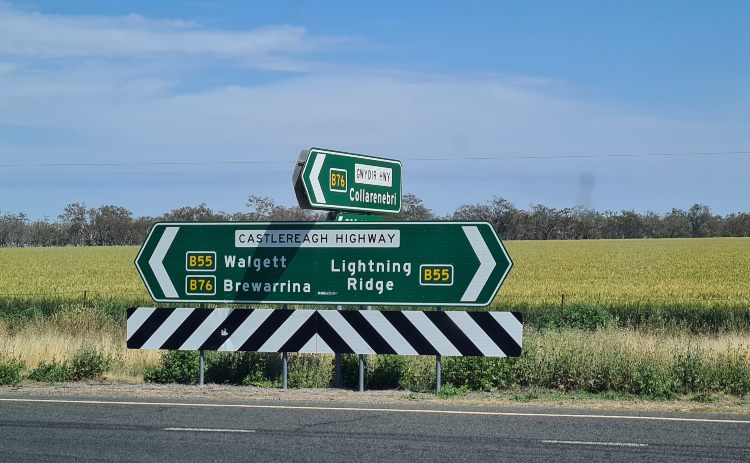
We drove from Moree, which is a good staging point if you are coming from the north.
Do you need a 4WD? No. The road into town and the main streets are sealed. The tracks out to the opal fields are gravel and potholed — drive slowly, avoid them in wet weather, and check conditions at the visitor centre before heading out. The Green and Orange Car Door Tours are the most demanding on a vehicle. If in doubt, ask at the visitor centre.
Hiring a car — There is no car hire in Lightning Ridge. If you are flying into Dubbo, the major rental companies are represented there. Note that most hire car agreements prohibit unsealed roads, which will limit your access to some opal field sites.
Driving after dark — Avoid it if you can. The highway between Walgett and Lightning Ridge has significant wildlife on the road at dusk and into the night. If you are arriving or departing near sunset, reduce your speed and allow extra time.
Start Here
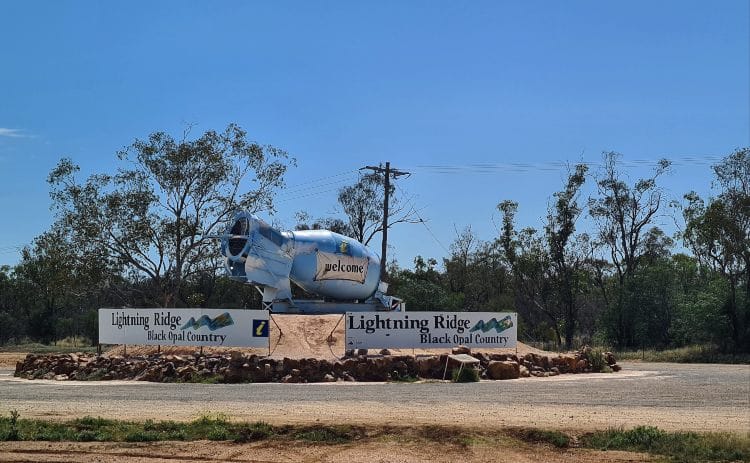
Lightning Ridge Visitor Information Centre
Make this your first stop. Pick up the $1 Car Door Tour maps, get current road conditions, and ask about what is open. The staff are helpful and the information is current — worth 20 minutes of your time before heading out.
Where: Lions Park, Morilla Street When: 9am–5pm Mon–Sat, 9am–1pm Sunday
Stanley the Emu
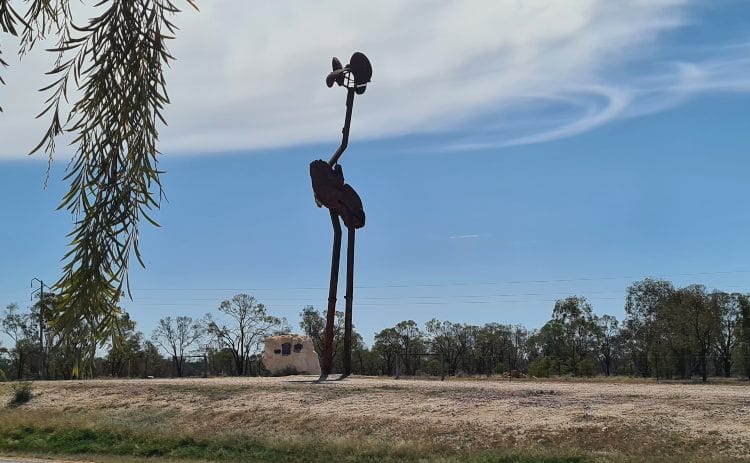
You will see Stanley before you even reach town — an 18-metre emu standing on the main road, built entirely from recycled materials including VW Beetle bonnets, car doors and a satellite dish for his head. He was created by local artist John Murray and named after Police Area Commander Stan Single, who donated materials from the old police station. Stanley contains a time capsule egg that will be opened in 2063.
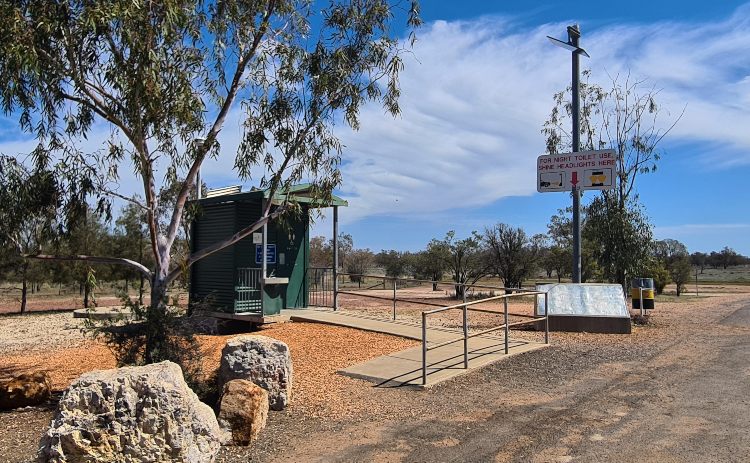
Directly opposite is a rest area with one of the more practical roadside innovations we have seen — face your headlights at a reflective panel to light the toilet block.
The Opal Fields
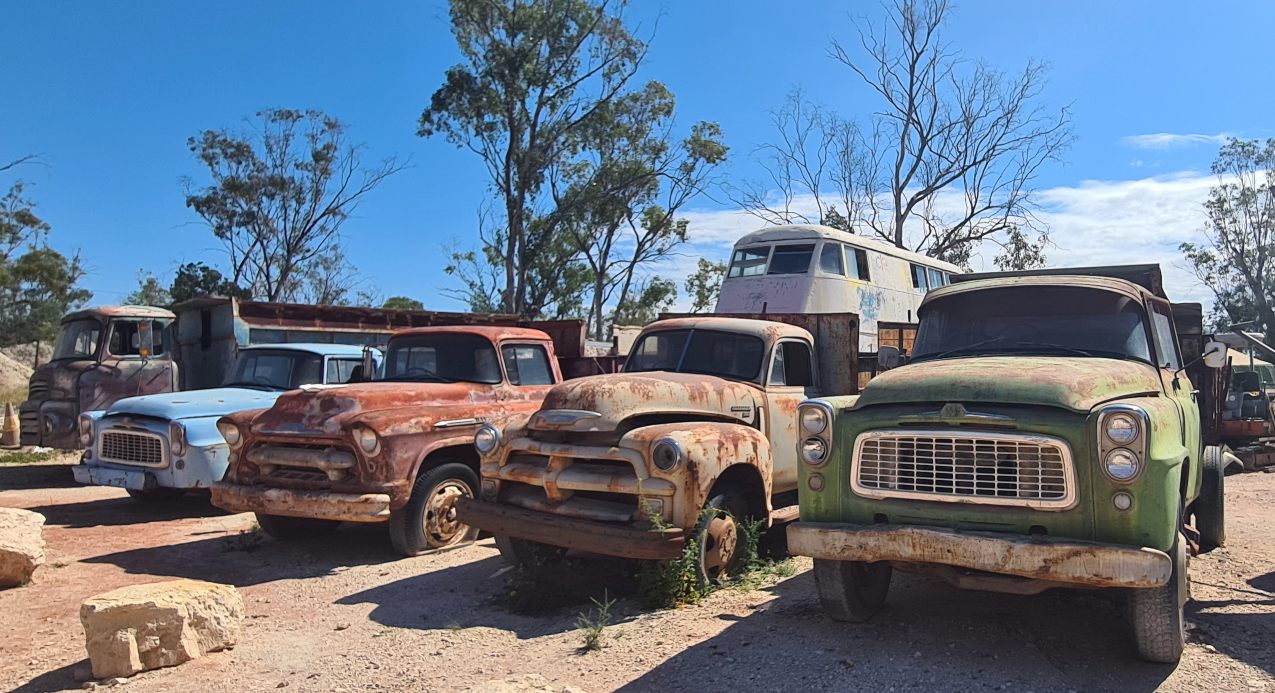
Lightning Ridge sits on the world’s largest deposits of black opal. The fields have been mined since 1903 and the landscape shows it — pink and cream dirt mounds, rusting machinery and open shafts as far as you can see. It looks like something from the moon.
Most of what there is to see out here is accessed via the self-drive Car Door Tours — a system of colour-coded routes marked by painted car doors nailed to posts. Maps cost $1 from the visitor centre. There are five routes, each covering different parts of the fields. Not all are motorhome or 2 wheel drive friendly.
Car Door Tours
We worked out which stops we could get to safely and resigned ourselves to missing the rest. Then lady luck stepped in. No, we didn’t find any gems, but we did meet two friendly travellers at our caravan park who offered to take us with them in their four-wheel drive, so we were off.
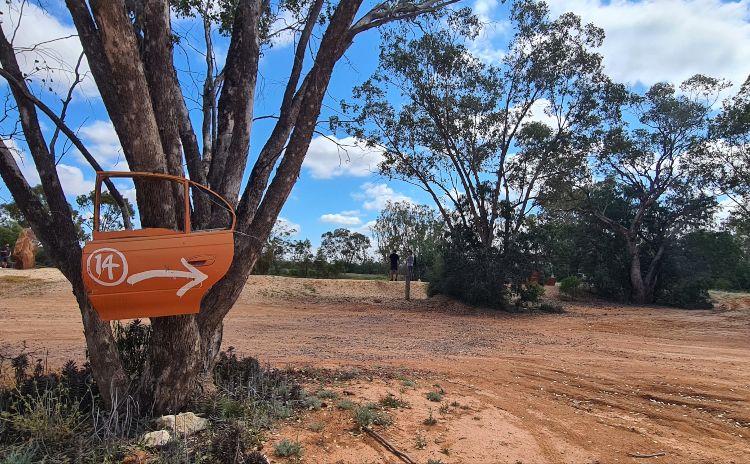
A note on road conditions: The Red tour is the most accessible for standard vehicles. The Green and Orange tours have rougher sections — manageable in a 2WD if you drive carefully and conditions are dry, but ask at the visitor centre first. If your vehicle is hired, check your rental agreement — most prohibit unsealed roads.
Red Car Door Tour
This was our favourite and the one we would recommend if you only have time for one. Driving time is around 20 minutes but allow several hours for stops.
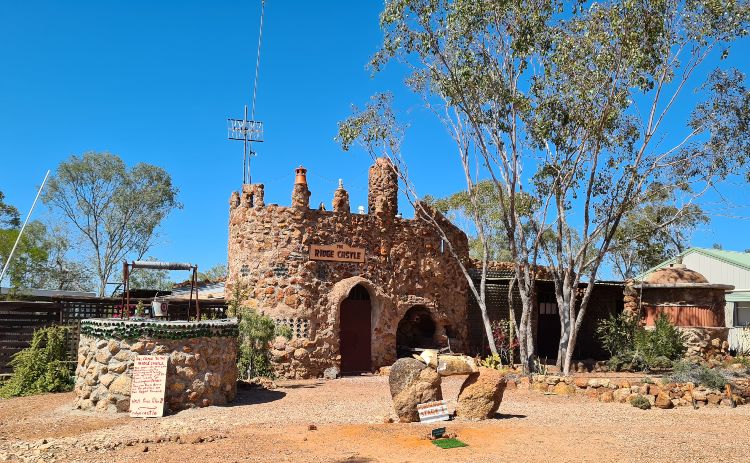
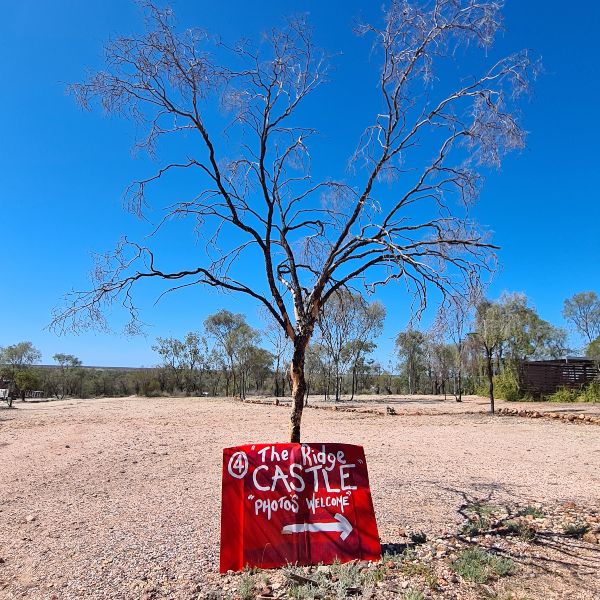
The key sites are Ridge Castle — a remarkable structure built from stone and bottles that you can actually book as accommodation — the Astronomers Monument, Amigo’s Castle and the Bottle House. A good mix of eccentric architecture and mining history.
Yellow Car Door Tour
Allow around two hours including stops. The driving route takes 45 minutes.
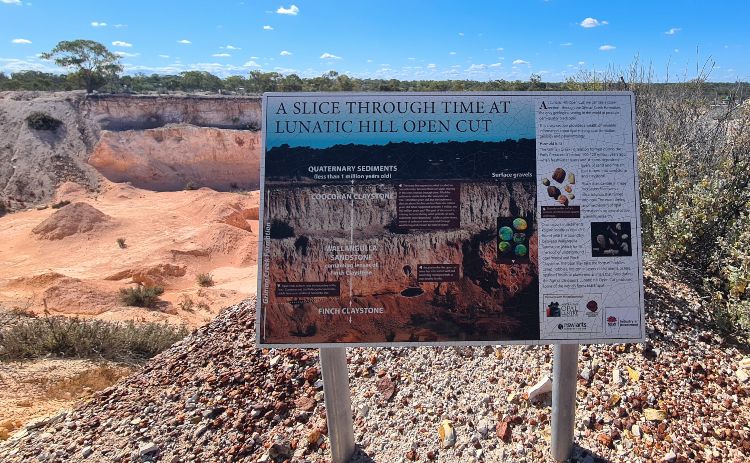
The main sites are the Three Mile Opal Fields, Chambers of the Black Hand, Lunatic Hill and the corrugated iron church at the Four Mile Opal Field.
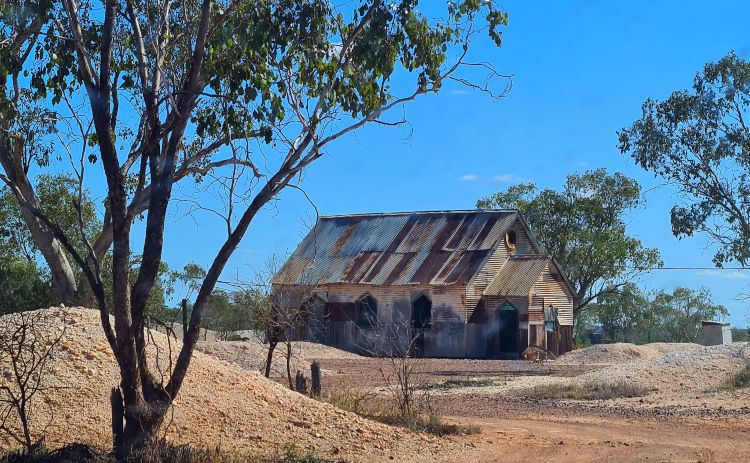
The church looks like it has been there for a century, but it was actually built as a set for The Goddess of 1967, a film released in 2000. The 1967 in the title refers to a Citroën, not the year.
Blue Car Door Tour
We skipped this one. Driving time is only 10 minutes with eight stops. The main site is Bevan’s Cactus Nursery — worth it if that appeals, otherwise the other routes offer more.
Green Car Door Tour
Do this one in the late afternoon. Our guide suggested it and the advice was spot on. The route takes about 30 minutes and finishes at Nettleton’s First Shaft Lookout, with views over the Coocoran Opal Fields.
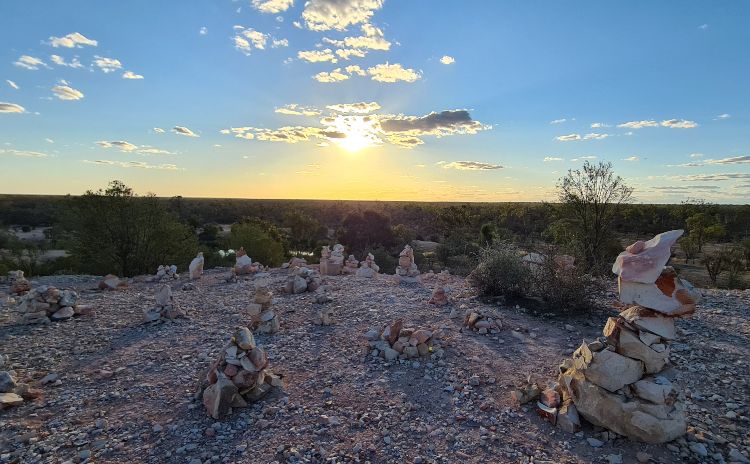
The sunset here reminded us of Uluru — there were around 20 cars parked up the night we visited, all waiting for the light.
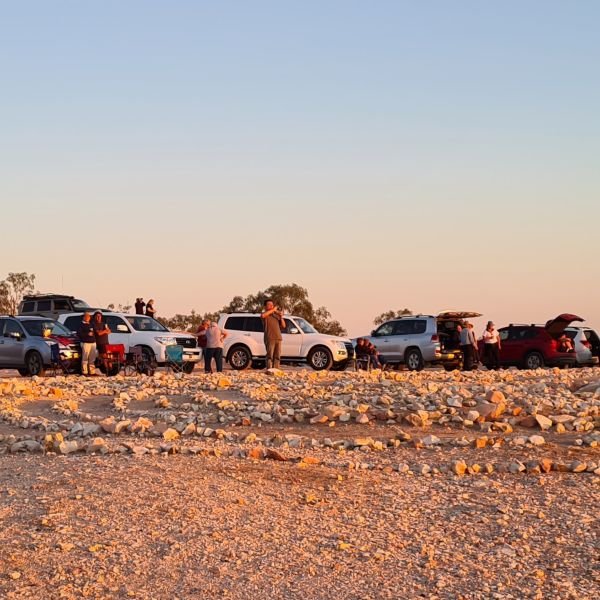
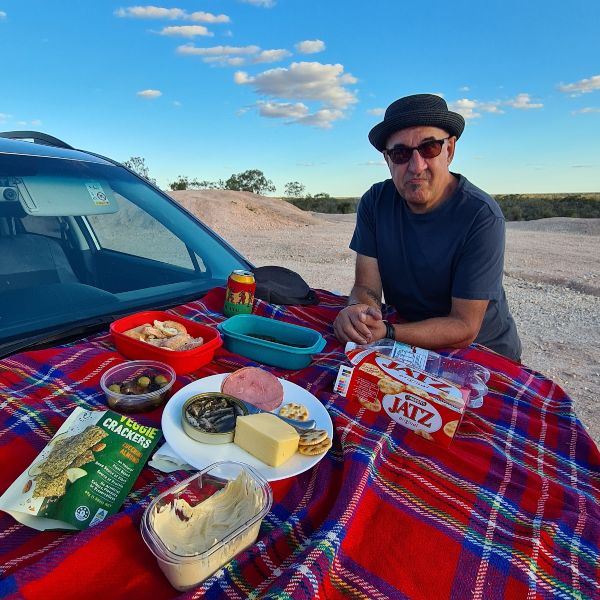
Allow at least half an hour after sunset before driving back — the route back to town in full dark is an experience in itself. Bring a picnic.
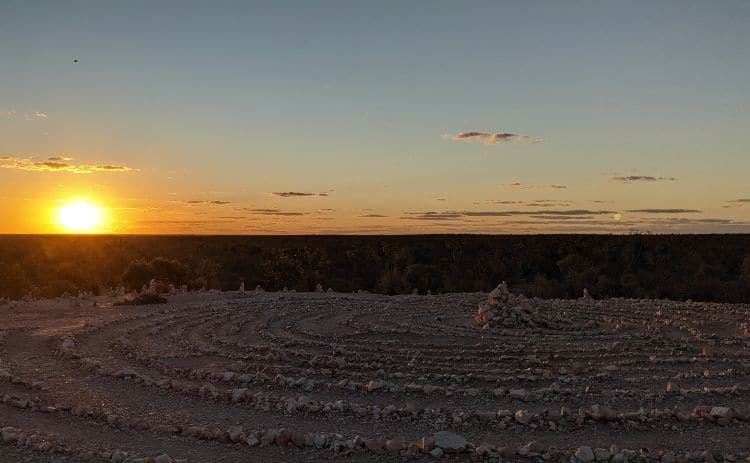
Charlie Nettleton dug the first mine in Lightning Ridge in 1903.
Orange Car Door Tour
The longest route, heading out to the Grawin Opal Fields around 50km from town. Key stops include the Glengarry ‘Hilton’, The Pub in the Scrub and the Sheepyard Hotel. You can self-drive using the Orange map, but the roads are the most challenging of the five routes. We booked a guided tour instead — no regrets.
Download all Car Door Tour maps here or pop into the Visitor’s Centre and pick up paper copies for $1 each.
Outback Opal Tours
If you would rather not drive yourself, Outback Opal Tours runs an eight-hour guided trip covering the Grawin Opal Fields and the key Orange route sites, including morning tea and lunch.
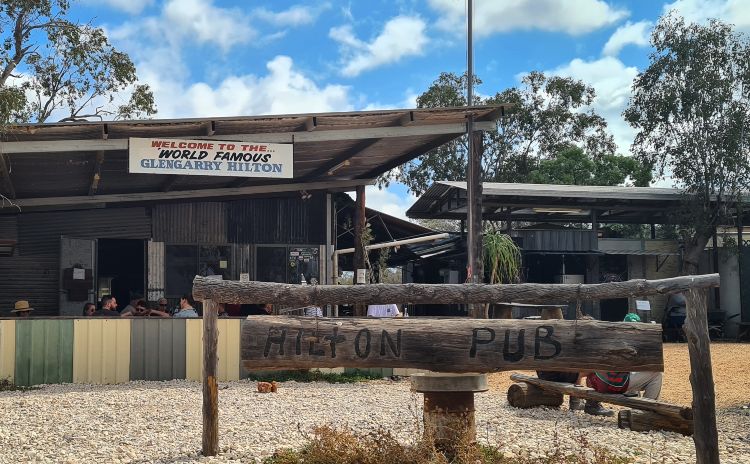
Our guide knew the area well and the commentary was genuinely useful. Recommended, particularly for the Grawin section where the roads are rough and the context of having a local explain what you are looking at makes a difference.
Fossicking
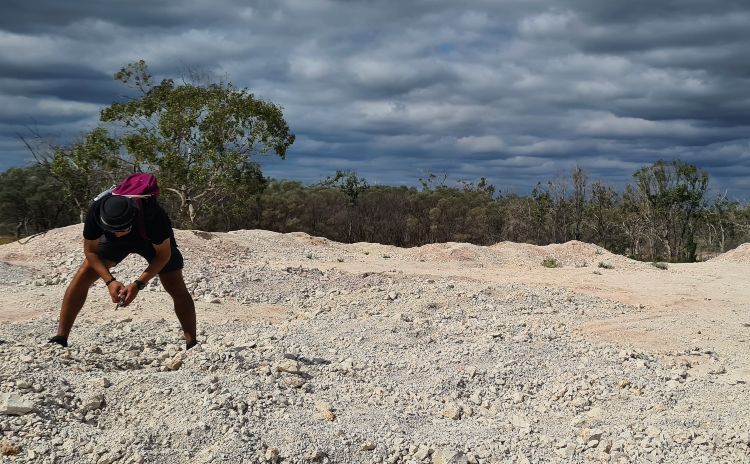
If the opal bug takes hold — and it might — you can try your luck at the public opal dumps, where cast-off mining material is piled up for tourists to sift through. All you need is a small handheld rake and a bottle of water to wash the rocks. Valuable finds do happen. The easiest public fossicking site is next to the visitor centre; there is another on the road to Grawin. Our day with Outback Opal Tours included a session at one of the heaps and a lesson in identifying worthwhile pieces.
Do not enter active mining claims marked by white pegs. Miners take trespassing seriously.
Things to see in town
The town centre is compact — a few dozen paved streets with most of what you need within walking distance. Allow a couple of hours to cover it properly.
Main Street
Morilla Street and Opal Street are the two main strips. Between them you have the jewellery shops, cafes, street art and most of the historic buildings. It is worth walking slowly — there is more to look at than first impressions suggest.
The Lightning Ridge Lolly Shop on Morilla Street is worth a look if you have kids in tow or a sweet tooth — it has become something of a local institution.
Australian Opal Centre
Start here. The centre is not primarily a shop — it holds the world’s leading collection of opalised fossils, and the staff are knowledgeable and happy to answer questions. It is small but the collection is impressive and gives you the context to appreciate everything else you will see on the opal fields.
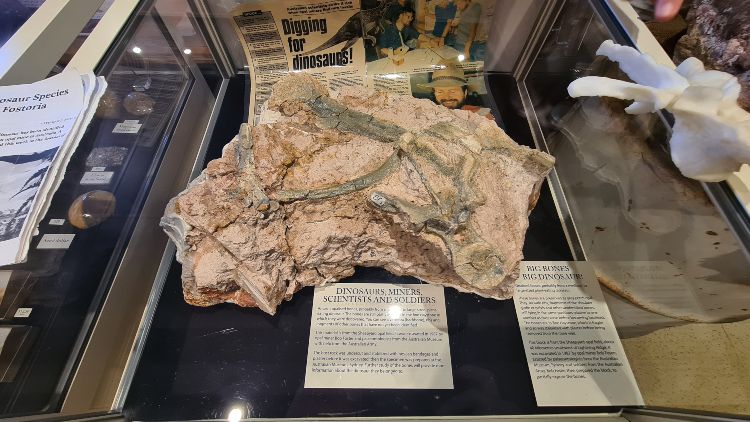
The new underground building is over 80% complete on the Three Mile opal field near Lunatic Hill, but construction is currently paused while the AOC seeks its final round of funding. Check the Australian Opal Centre website for the latest before your visit. When it opens, it will be worth a return trip — it has been designed by Pritzker Prize-winning architect Glenn Murcutt.
Where: 11 Morilla Street When: March–November 9am–5pm Mon–Sat. December–February 9am–1pm Mon–Sat
Heritage Cottage Hospital Gallery
On Morilla Street you will find a life-size bronze sculpture of Charlie Nettleton — the man who sank the first mine here in 1903 and is credited as the founder of the black opal mining industry. The sculpture is by artist Brett “Mon” Garling.
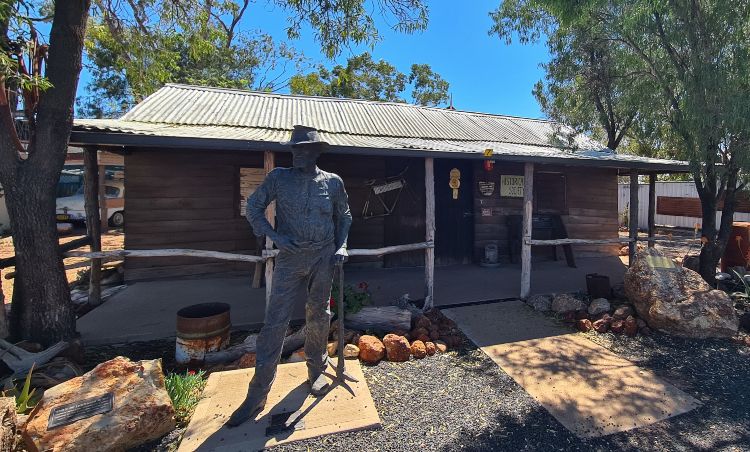
The complex includes a Miner’s Cottage built in 1932 and the 1915 Cottage Hospital. It was closed when we visited but worth checking — from the outside there is plenty to look at and if it is open there is a lot more inside. Directly across the road is Coopers Cottage, one of the oldest buildings in town, built in 1916.
Where: 7 Morilla Street When: Tuesday, Wednesday and Friday, 10am–4pm
John Murray Art Gallery and Street Art
Murray’s style is instantly recognisable — bold, large-scale and distinctly local. There are several of his murals around town, but it is worth stopping into the gallery itself for a look.
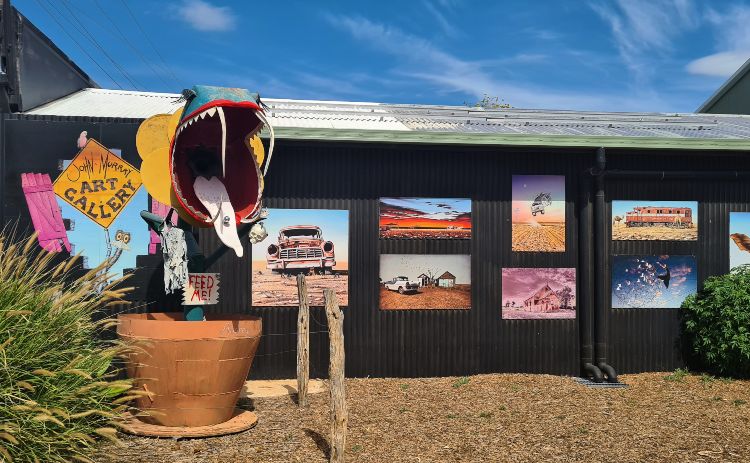
His partner Vicky’s photography is also on display. Free to visit.
Where: 8 Opal St Cost: Free
Bottle House and Mining Museum
Built from beer bottles — walls, structures and even the dog house. We did not get inside on our visit as it was closed, and the reviews suggest the opening hours are unreliable. Free to look around outside; $10 to go in if it is open. Worth a look from the street regardless.
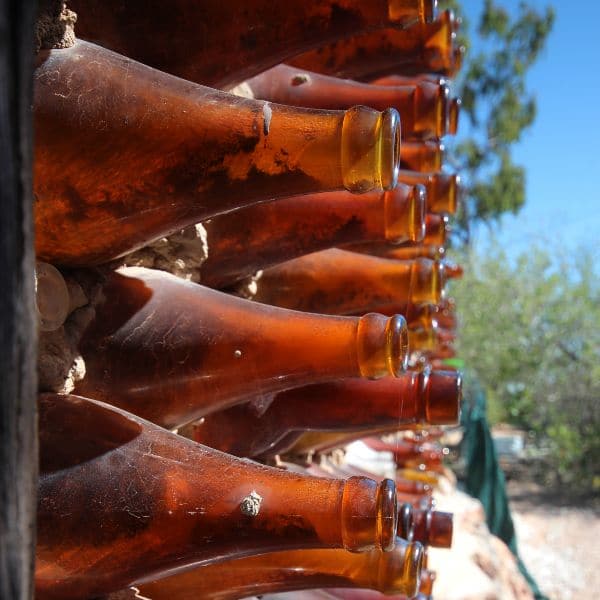
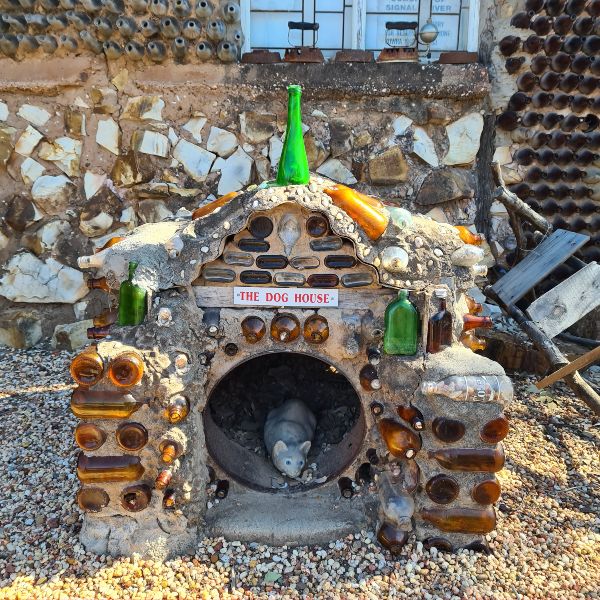
If this appeals, the Beer Can House nearby is worth adding to your list too.
Where: 60 Opal St When: 9am–3.30pm daily. Closed over summer, reopens 1 March. Cost: Free outside, $10 inside
Amigo’s Castle
Heritage listed and visible from the road. The castle was built by a local who was subsequently convicted of murder and sentenced to 18 years.
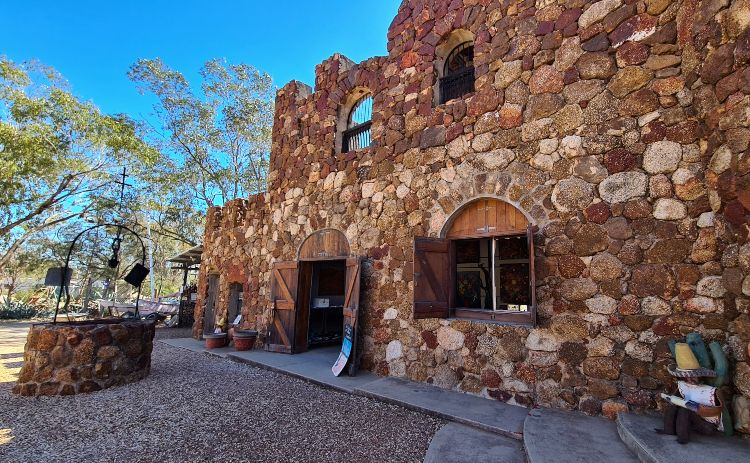
It is an interesting exterior but we would not pay for the tour now given the circumstances — see it from the outside and move on.
Worth Knowing About
A few attractions we did not get to — either because of cost, timing or because they simply did not appeal. Listed here because they come up on every Lightning Ridge itinerary and you may feel differently.
- Chambers of the Black Hand — A mine where the walls feature hand-carved artwork rather than opals. On every must-see list. At $40 per person it did not make our cut, and it was hard to fit into our schedule. If underground art sounds like your thing, book ahead — it fills up in busy season.
- The Big Opal — A walk-in opal mine experience. $20 per person. We were short on time and skipped it.
- Opal Mine Adventure — Also $20 per person. Busy when we visited and we had not booked. Worth reserving ahead in peak season if this is on your list.
The Artesian Bore Baths
Free, open almost 24 hours and one of the best things about staying in Lightning Ridge. The water comes out of the ground at 41.5°C — hot enough to take a moment to get used to, particularly in warm weather. We had three days of practice at the baths in Moree before arriving, which helped.
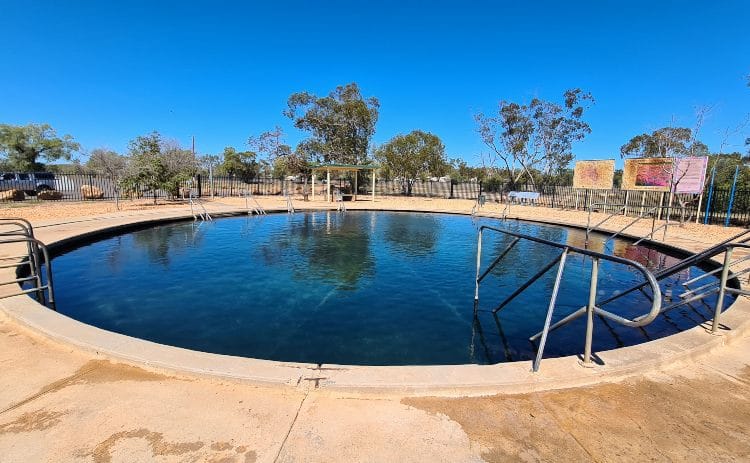
The best times to visit are early morning before the heat of the day, or late evening when locals tend to congregate. It becomes a social occasion — people sit around and talk, and it is one of the easier ways to meet residents rather than fellow travellers.
The baths are closed for cleaning on Monday, Wednesday and Friday between 10am and noon. We arrived at 10.05am on our first attempt.
Where: Pandora Street When: Open almost 24 hours. Closed for cleaning Mon, Wed and Fri 10am–12noon Cost: Free
Note: At 41.5°C the water is genuinely hot. Limit your soak time in summer and get out if you feel lightheaded.
Where to Eat
We ate at Morillas Café every day, usually for brunch or lunch, and were happy every time. The coffee was good, the food was solid and the prices were reasonable for an outback town. The IGA on Opal Street was also a genuine surprise — well stocked, good ready meals and salads, and better value than most outback supermarkets we have come across.
Beyond that, we cooked most of our own dinners. The following are based on current visitor recommendations rather than our own experience.
Dinner
- Bruno’s Italian Restaurant — consistently rated the best dinner option in town. Wood-fired pizza and pasta. Book ahead in peak season.
- Wattle Bistro, Lightning Ridge Bowling Club — good value, family friendly, covers the classics: schnitzels, steaks and a Chinese menu. A community staple.
- Nobby’s Bistro, Outback Resort — outdoor seating, classic pub food. Visitors specifically mention the lamb cutlets.
Coffee and breakfast
- Gourmet Gecko Cafe — art-filled, relaxed, and reportedly does proper espresso. Popular for breakfast.
- Opal Street Cafe — hearty breakfast wraps, friendly service.
- The Busy Bee Cafe — long-standing local, good for a quick lunch or a burger.
A note on hours — some cafes close around 2pm and several restaurants only open for dinner on specific nights. Check before you go. In the hot season things can be more limited.
Morillas Café Where: 2 Morilla St When: 7am–2pm most days
IGA Where: 33 Opal St When: 7am–7pm, 9am–5pm Sunday
It’s a good idea to have travel insurance to cover any cancellation or unexpected problems that may arise in the outback. We use and recommend Cover-More for all our travel. They also offer an inbound plan for anyone visiting Australia.
Where to Stay
Accommodation in Lightning Ridge is straightforward — caravan parks, motels, or Airbnb. There are at least five caravan parks in the area. These are the three we looked at.
Lightning Ridge Holiday Park
This is where we stayed and we would book it again. The location is good — the supermarket, cafes and main street sites are a few minutes walk. The owners work hard to create a decent atmosphere, with happy hours three times a week in busy season and complimentary pizza for guests. Facilities are older but everything was spotlessly clean. We ended up staying a day longer than planned.
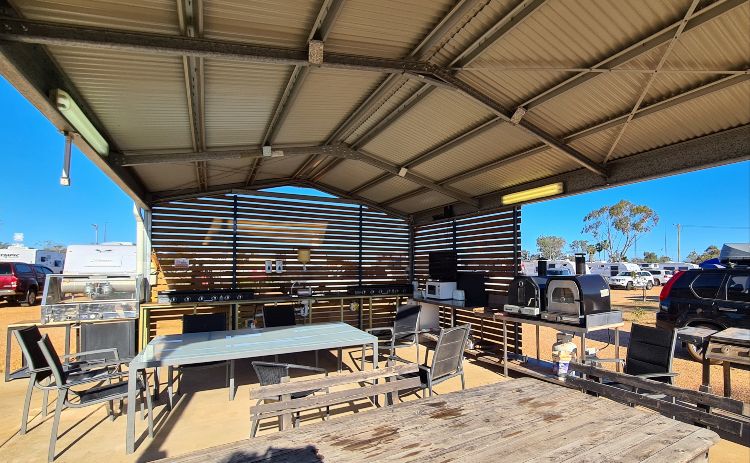
They offer tent sites, powered and unpowered sites and cabins. The community pool and water park are next door, open in summer.
Where: 44 Harlequin Street
BIG4 Opal Holiday Park
Most other travellers we met were staying here. It is part of the Big4 chain and the closest park to the Artesian Baths, totally walkable.
There is an onsite pool and a range of cabins from 1-3 bedrooms and an accessible option. Powered sites were around $12 more per night than the Holiday Park when we checked. Probably the better choice if you are travelling with kids.
Where: 142 Pandora Street

Cooper’s Cottages
A newer option that opened in April 2025 and is already attracting strong reviews. Five self-contained cottages on Morilla Street fully equipped kitchen, air-conditioning, free WiFi and private parking. Two-bedroom configurations, central location. Pricier than the caravan parks but based on visitor feedback it appears to be worth it — book early as these cottages are in high demand. We haven’t stayed here ourselves but it fills a gap for travellers who want self-contained rather than caravan park accommodation.
Where: 20 Morilla Street Book via Booking.com
All About Opals
Lightning Ridge is the world’s primary source of black opal — the rarest and most valuable type. The terms you will hear thrown around are worth knowing before you arrive.
- Black opal — the most prized variety, characterised by a dark body tone that makes the colours appear more vivid. Most of what is mined here falls into this category.
- Doublet — a thin slice of opal glued to a dark backing to enhance the colour. Less valuable than a solid stone.
- Triplet — a doublet with a clear cap on top for protection. The most affordable option and fine for everyday jewellery.
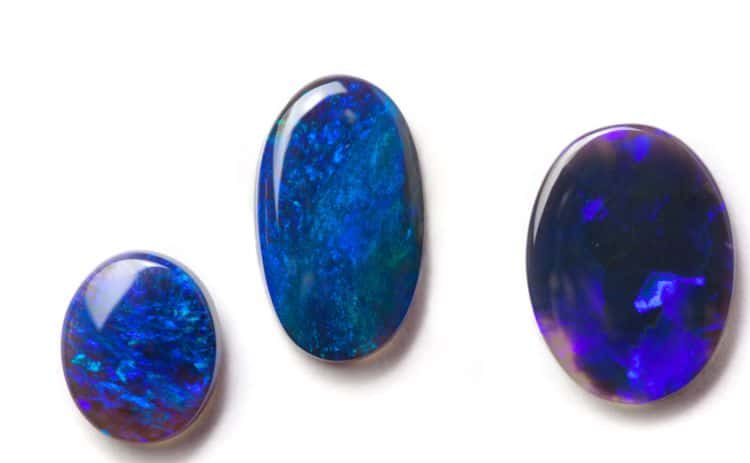
Fossicking — searching through cast-off mining material for overlooked stones. See the Opal Fields section for how to do it.
The Ridge is a good place to buy. Prices are lower than city jewellers and you are buying direct from the source. We ended up at Down to Earth Opals — much of it was outside our budget but we bought a solid stone to have set later. Worth a browse even if you are not planning to buy.
Planning a lap of Australia? Read our interviews with 5 full-time travellers and get their tips!
How to Spend 3 Days in Lightning Ridge
Day 1 — Town Start at the visitor centre and pick up the Car Door Tour maps. Walk to the Australian Opal Centre for context, then work your way along Morilla Street and Opal Street — Heritage Cottage, John Murray Gallery, street art, jewellery shops. Evening soak at the Artesian Baths.
Day 2 — The Fields Morning: Red Car Door Tour. Afternoon: Yellow Car Door Tour. Time the Green Car Door Tour for late afternoon to catch sunset at Nettleton’s First Shaft Lookout. Bring a picnic.
Day 3 — Grawin Book the Outback Opal Tours full-day trip to the Grawin Opal Fields, or self-drive the Orange route if your vehicle is up to it. Includes the Glengarry Hilton, Pub in the Scrub and Sheepyard Hotel. Final soak at the baths in the evening.
Lightning Ridge is one of those places that is hard to explain until you have been. Allow at least three days — two is not enough. If you have questions, head over to our Facebook group and we will do our best to help.
Would you like to see more of our content?

Click the button above and then tick the box next to our name
Have questions about exploring Australia?
Head over and join our Facebook Group and we will be happy to help
The Australian Opal Centre displays many examples of opals and of fossilised opals, information about opals and the history of Lightning Ridge. The Centre is reported to have the largest collection of fossilised opals in the world, many of which cannot be displayed in its current shop front location. The Society is raising funds to build an underground two story building.
I am planning a return visit as soon as it opens!
Love this post! I had no idea about the opal mining and the whole opal festival in Lightning Ridge. Definitely adding it to my Australian bucket list now